
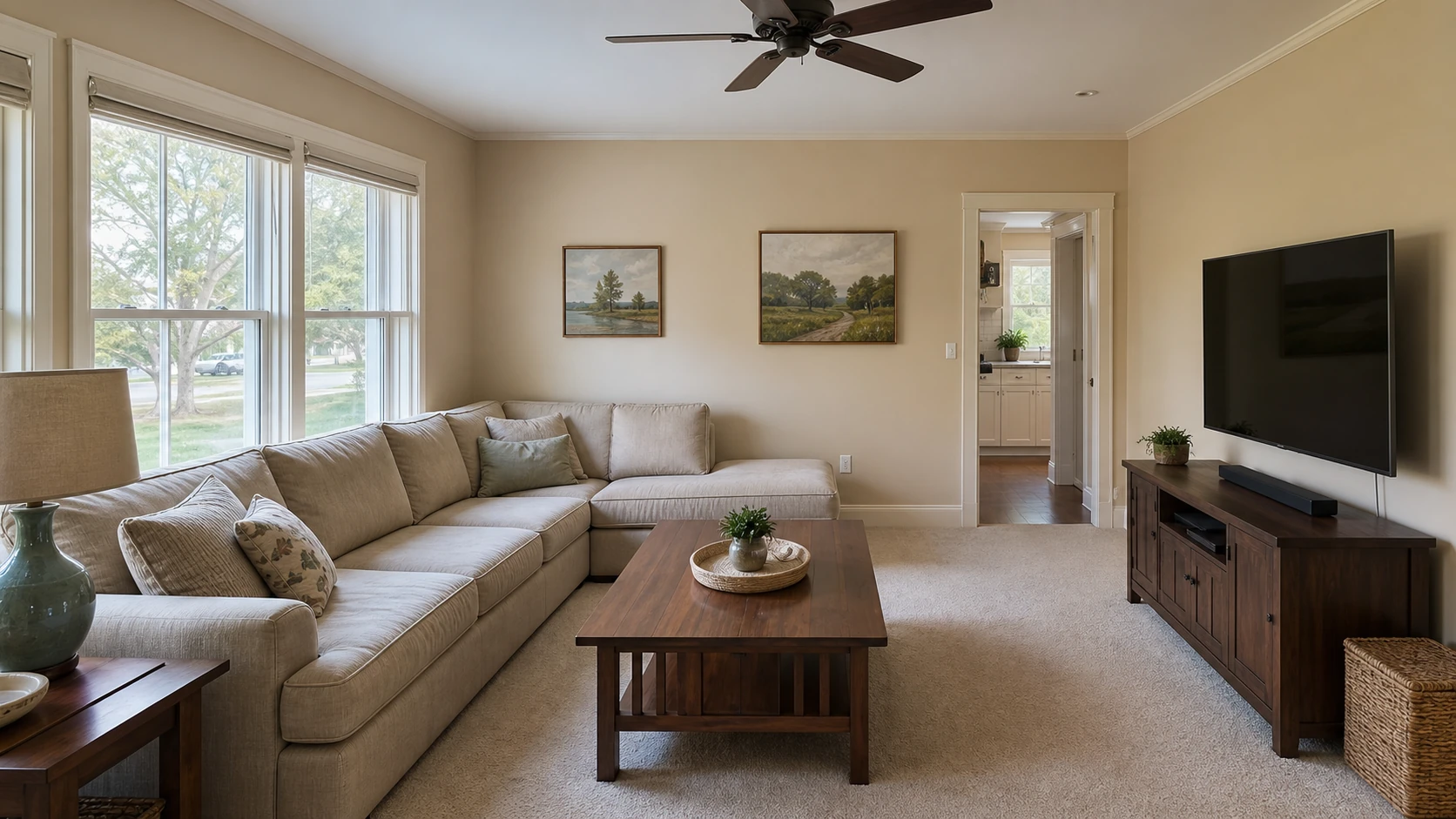
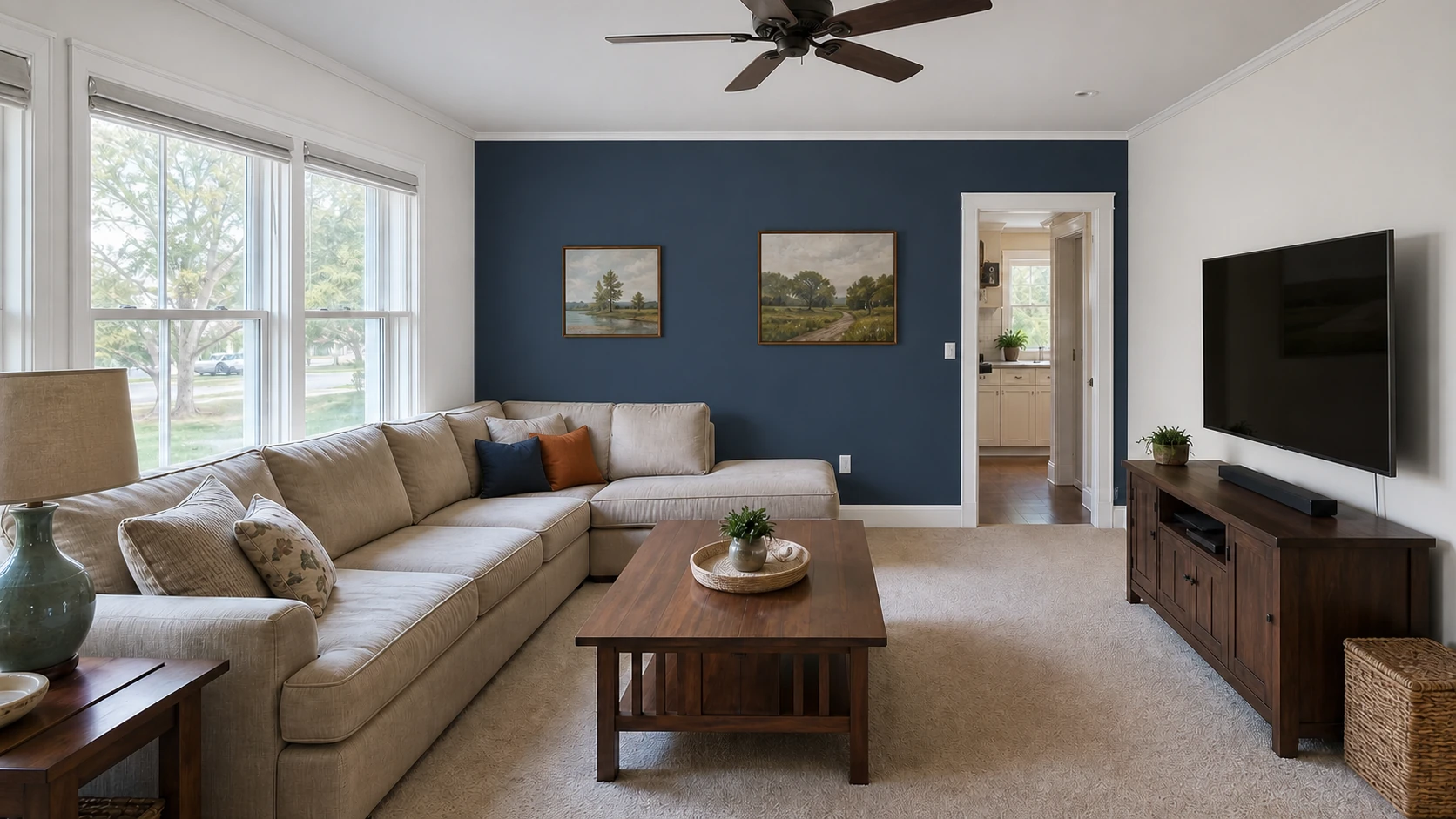
Primer is easy to skip on a budget repaint and easy to regret skipping later. On every House Painting job, whether interior or exterior, we treat primer as a separate step for a reason: it does a different job than the topcoat.
What primer actually does
Primer seals porous surfaces like bare drywall and raw wood so the topcoat goes on evenly instead of soaking in unevenly. It blocks stains, water marks, smoke damage and knots in wood from bleeding through finish paint, and it gives glossy or previously painted surfaces something to grip.
On exteriors, primer also helps bridge major color changes and seals bare wood exposed by scraping and sanding before the weather gets to it.
When it's necessary
Bare drywall, patched areas, raw wood, water stains, and big color changes, especially going from a dark color to a light one, all call for a dedicated primer coat. Previously painted surfaces in good condition with a similar color sometimes don't need a full primer coat, but we make that call surface by surface, not for the whole house at once.
Skipping primer where it's needed usually shows up within a year or two: uneven sheen, stains bleeding back through, or peeling in spots where the topcoat never properly bonded.
If you're going from a dark wall color to a light one, always ask for a tinted primer first. It saves an extra topcoat and gives a truer final color.
Ready to get started?
We factor primer into every estimate rather than treating it as an upsell. Request a free estimate and we'll tell you exactly what your surfaces need.